The Inspector
The Inspector is the single-page UI durable-server serves at /inspector when it’s started with
--ui-dir. In v1.0.0 it covers every operation the API and CLI offer: submit, the newest-first
run list, run detail, spec read-back, cancel, diagnostics, compact and backup — no separate
dashboard needed.
durable-server --journal journal --listen 127.0.0.1:58300 --ui-dir apps/inspector/build \ --handler step=http://127.0.0.1:58320/stepThen open http://127.0.0.1:58300/inspector — a local page, on a local server.
The two screens most visits start on. First, the key field — the only thing standing between the page and the run list:
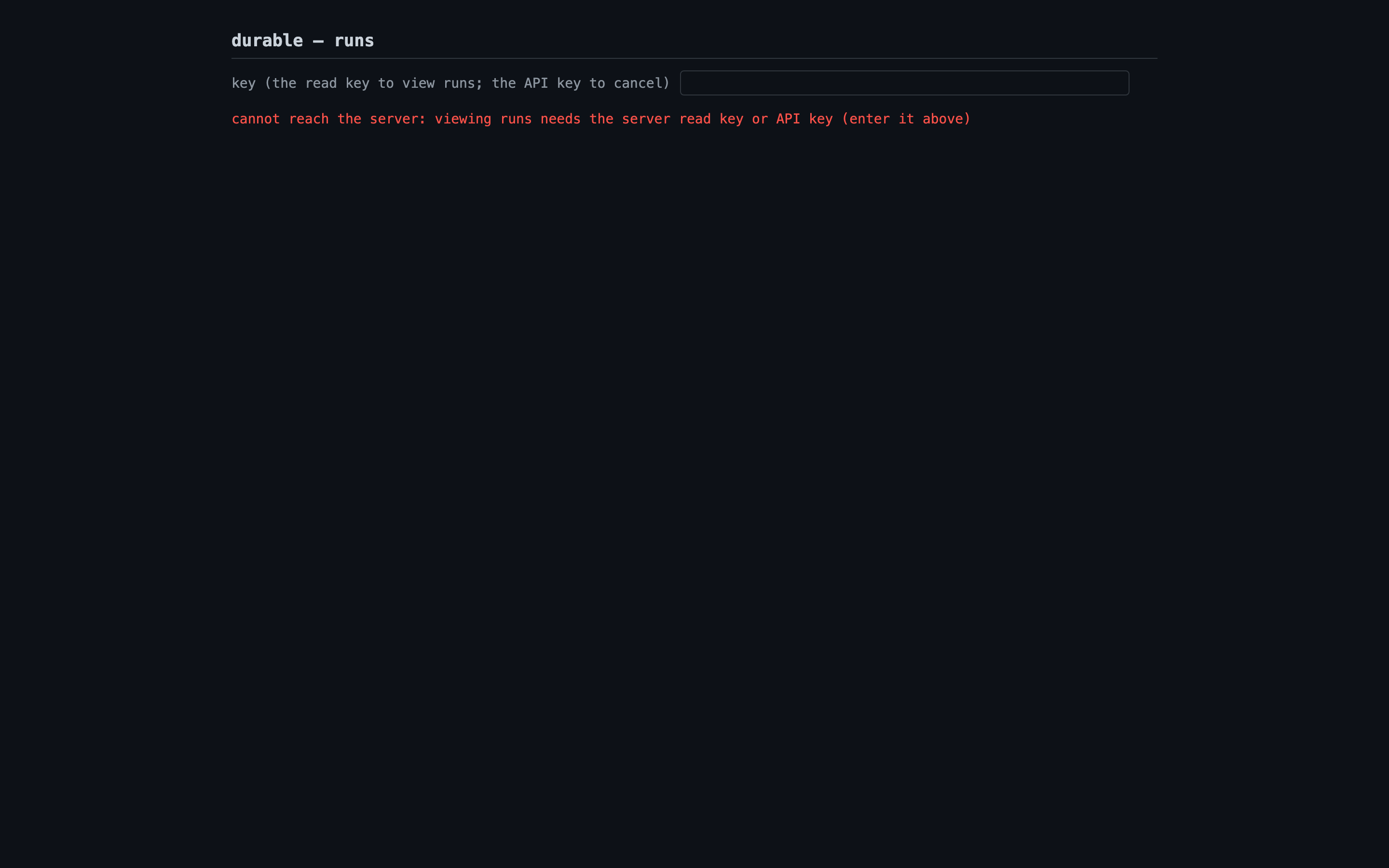
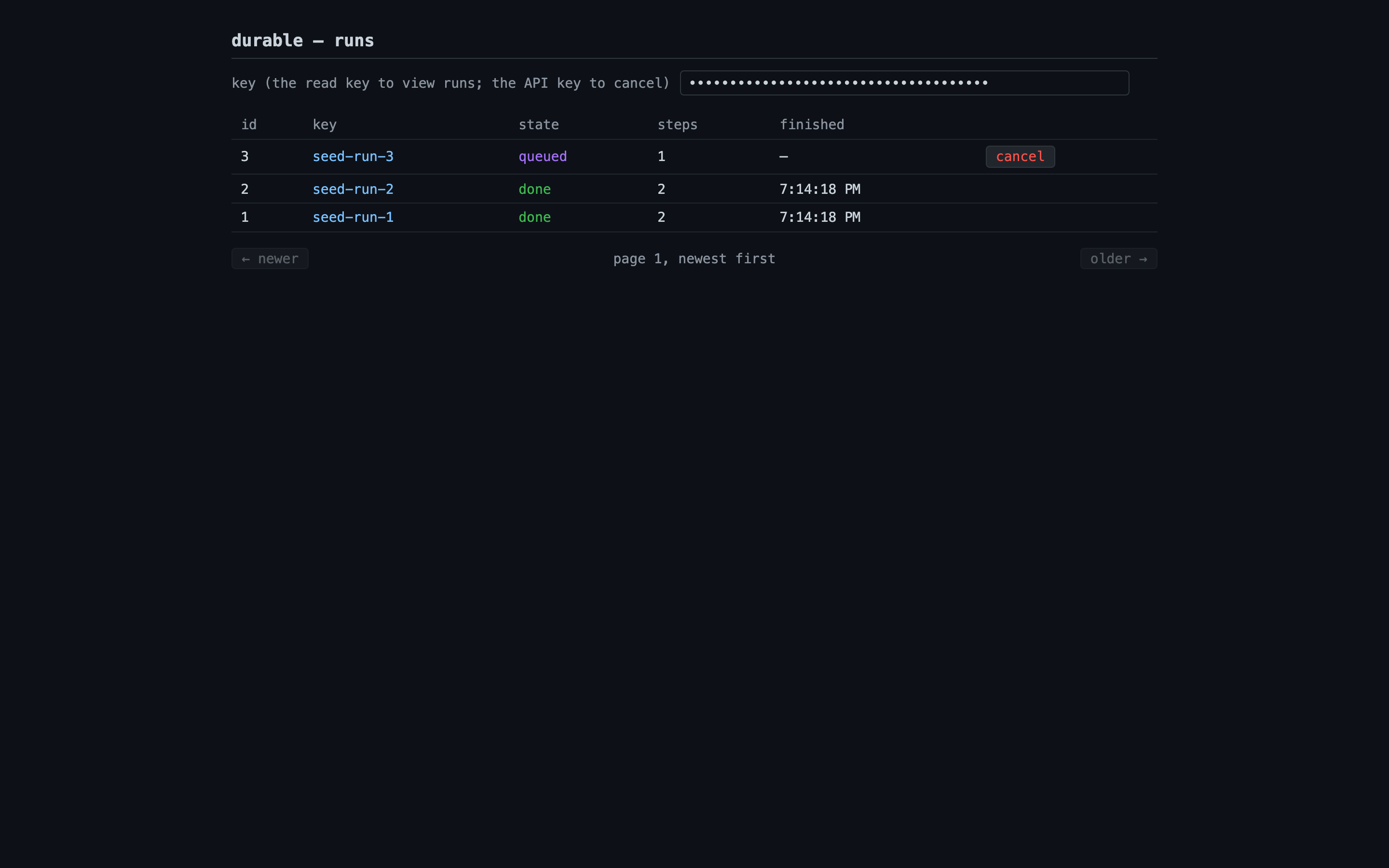
Then, once a key is in, the newest-first list — done runs, one still queued, a cancel button on anything live:
Which key does what
Section titled “Which key does what”Paste a key into the field at the top and the list loads. The two keys have honest boundaries, and the UI enforces them the same way the API does:
DURABLE_READ_KEYviews. Listing runs and opening a run’s detail are reads; the read key is all they need. Day-to-day browsing should carry this one.- The API key mutates. Submit, cancel, spec read-back (the input may be customer content), and
the admin operations — diagnostics, compact, backup — all need
DURABLE_API_KEY. Mutating actions sit behind a two-step confirm so a stray click can’t cancel a run. - Or no key at all on an
--open-readsserver — which, being loopback-only, means your own machine anyway.
Where the key lives is the security-relevant part, so it’s precise: sessionStorage, and
nothing else. Not localStorage, not a cookie, never the URL — the key dies with the tab, a
closed tab leaks nothing, and Forget keys clears it on demand. The key is never baked into the
build and never sent anywhere but the same-origin API.
Same-origin by design
Section titled “Same-origin by design”The Inspector is served by durable-server itself, so its API calls are relative — no CORS, no
configuration, no second origin to trust. Light and dark themes use semantic tokens rather than a
baked palette, and the two-row phone layout keeps run ids, keys and the cancel action unclipped at
390 px. What it never does: send your key anywhere but the origin that served it, or persist
anything beyond that one sessionStorage slot.